How to track HR compliance across your company
Learn how organisations can track HR compliance across their company, from employee records and policies to working hours, data protection, and audit trails.

HR compliance is not a single task. It is an ongoing process that touches almost every part of the employment lifecycle.
From employment contracts and leave policies to employee data protection and disciplinary procedures, businesses must ensure that their internal processes align with employment laws and regulatory requirements.
The challenge for many organisations is not understanding the rules, but keeping track of compliance across multiple employees, policies, and systems.
As companies grow, it becomes increasingly difficult to monitor HR compliance manually. This is why many organisations begin to look for more structured ways to track compliance across their workforce.
What HR compliance means in practice
In practical terms, HR compliance means making sure the organisation follows employment laws and internal policies consistently.
This includes areas such as:
- employment contracts and written terms
- holiday and leave entitlement
- working hours and rest periods
- employee data protection
- policy distribution and acknowledgements
- disciplinary and grievance procedures
Tracking compliance across these areas requires more than simply having policies in place. Employers need to be able to demonstrate that rules are followed and that accurate records are maintained.
Why tracking HR compliance becomes difficult
Many organisations initially track HR compliance through spreadsheets, email chains, and document folders. While this approach can work for very small teams, it quickly becomes unreliable as the organisation grows.
Common problems include:
- employee records stored in multiple locations
- contracts that are not updated when roles change
- leave policies that do not match working patterns
- policies issued without acknowledgement tracking
- missing audit trails for HR decisions
These gaps can lead to compliance risks, particularly when companies cannot demonstrate that processes were followed correctly.
Key areas companies should monitor
To track HR compliance effectively, organisations need visibility across several key areas of employee management.
Employee records
Employers should maintain structured employee records that include employment terms, role information, contracts, and key employment events such as promotions or working pattern changes.
When these records are scattered across documents or email threads, inconsistencies often appear.
Leave and working patterns
Holiday entitlement and working patterns must stay aligned with employment terms.
For example, if an employee moves from a four-day working week to a five-day week, their leave allowance and internal records should reflect that change.
When systems do not stay aligned, businesses can unknowingly fall out of compliance.
Policy management
Many employment laws require organisations to maintain and communicate workplace policies. However, simply publishing a policy is not always enough.
Companies often need to demonstrate that employees received and acknowledged those policies.
Tracking acknowledgements and maintaining version history can help ensure policies remain enforceable.
Employee data protection
Employee data must be handled carefully and in line with data protection regulations.
This means controlling who can access personal information, storing documents securely, and maintaining clear records of how data is managed.
Permissions and audit logs are critical in this area.
HR decision records
Disciplinary actions, grievances, and performance-related decisions should be documented carefully.
If disputes arise, businesses need clear records showing how decisions were made and what procedures were followed.
Using systems to monitor HR compliance
As organisations grow, managing compliance manually becomes increasingly risky.
Modern HR platforms provide a structured way to manage employee data, policies, and records in one place.
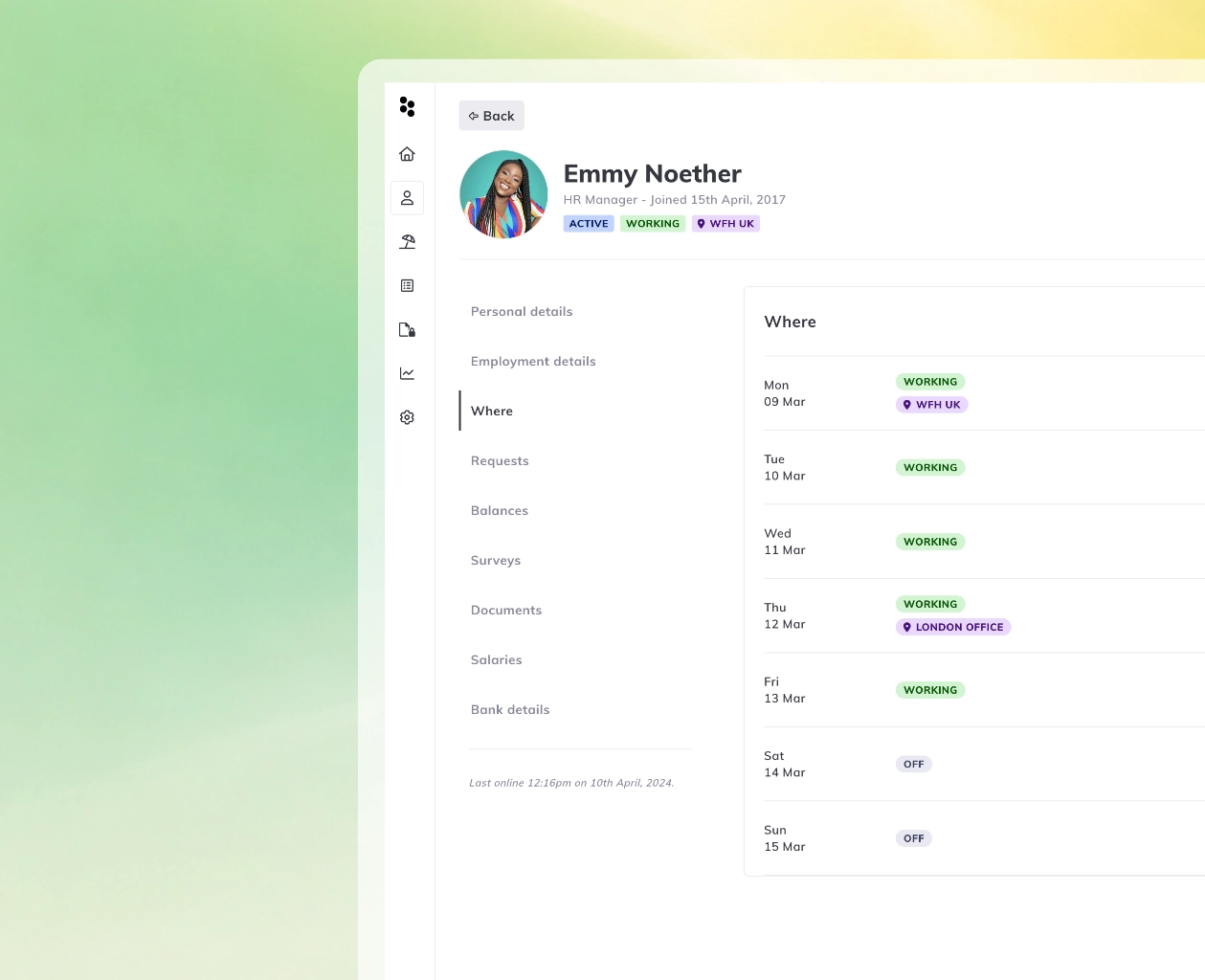
Platforms such as PandaHR help organisations centralise employee records, track policy acknowledgements, manage leave policies, and maintain audit trails for HR activity.
By bringing these processes into a single system, employers gain better visibility across their workforce and can identify potential compliance gaps earlier.
Building a compliance-focused HR process
Tracking HR compliance effectively requires both clear policies and reliable systems.
Organisations should aim to build processes that:
- maintain structured employee records
- track employment changes consistently
- record policy acknowledgements
- control access to employee data
- maintain clear audit trails for HR decisions
When these elements are in place, businesses are far better equipped to manage employment compliance as they grow.
Rather than reacting to compliance issues after they arise, organisations can monitor HR processes continuously and address potential risks early.
Frequently asked questions
What is HR compliance tracking?
HR compliance tracking refers to monitoring employment policies, records, and processes to ensure they follow employment laws and internal governance requirements.
Why is tracking HR compliance important?
Employers must be able to demonstrate that they follow employment laws and workplace policies. Without structured records, companies may struggle to prove compliance during disputes or audits.
What areas of HR compliance should companies track?
Companies typically need to track employee records, leave policies, working hours, policy acknowledgements, data protection processes, and disciplinary procedures.
Can HR software help track compliance?
Yes. HR platforms can centralise employee records, manage policies, track acknowledgements, and maintain audit logs that help organisations monitor compliance more effectively.
How does PandaHR help with HR compliance?
PandaHR helps organisations track HR compliance by centralising employee data, managing policies, monitoring leave and working patterns, and providing audit trails for HR activity.
HR software for SMBs
Clarity and control for growing organisations
Start your free trial of PandaHR and manage employee records, policies, and core HR workflows in one secure, structured platform.