How private tenant HR software works
Learn how private tenant HR software works, including how dedicated infrastructure, isolated databases, and controlled deployments help organisations manage employee data securely.

Most HR software today is delivered through SaaS platforms. In these systems, many organisations share the same underlying infrastructure while their data is logically separated.
For many businesses this model works well. However, some organisations require greater control over their infrastructure, security configuration, and employee data.
This is where private tenant HR software becomes an important option.
A private tenant deployment provides each organisation with its own dedicated instance of an HR platform. Rather than operating inside a shared SaaS environment, the organisation runs the HR system within an isolated infrastructure environment.
This model allows companies to retain greater control over how employee data is stored, accessed, and managed.
Understanding the private tenant deployment model
Private tenant HR software is built around the concept of dedicated environments.
Instead of multiple companies sharing the same infrastructure, each organisation operates its own isolated application environment and database.
This means the HR platform is deployed specifically for that organisation, creating a clear separation between systems.
The organisation can then operate the platform within its own infrastructure or a controlled environment that aligns with internal security policies.
This deployment approach provides a balance between modern HR platforms and traditional infrastructure control.
Dedicated infrastructure environments
In a private tenant deployment, the HR platform runs within a dedicated infrastructure environment.
This environment can exist within the organisation's own cloud account or within a controlled infrastructure environment designed specifically for that customer.
Because the environment is isolated, organisations can apply their own infrastructure policies, monitoring tools, and security configurations.
This approach is particularly useful for companies that already operate strict infrastructure governance frameworks.
Isolated databases and data control
One of the most important aspects of private tenant HR software is database isolation.
Employee records, contracts, identification documents, and internal HR data are stored in a dedicated database that belongs solely to the organisation.
This eliminates the shared database structures typically used by multi-tenant SaaS platforms.
For companies concerned about data residency, governance, or internal data policies, this level of control can be a significant advantage.
Security configuration and access control
Private tenant deployments allow organisations to apply their own security configuration.
This can include network restrictions, access controls, monitoring tools, and infrastructure security policies.
Because the platform runs within a dedicated environment, companies can align the HR system with their broader security architecture.
This flexibility is particularly valuable for organisations operating in regulated industries or those with strict internal security requirements.
Operational control and system updates
Another benefit of private tenant HR software is operational control.
Organisations can control when system updates are applied, how integrations are configured, and how the platform evolves over time.
This provides greater predictability compared with shared SaaS environments where system updates are applied globally across all customers.
Companies that require controlled change management processes often find this approach easier to manage.
Integrating HR systems with internal infrastructure
Private tenant deployments can also make it easier to integrate HR systems with other internal platforms.
Organisations can connect HR workflows with identity management systems, finance platforms, reporting tools, or internal automation systems.
Because the infrastructure is dedicated, companies have greater flexibility in how integrations are implemented and secured.
This enables deeper integration between HR operations and the broader technology environment.
Private tenant HR software in practice
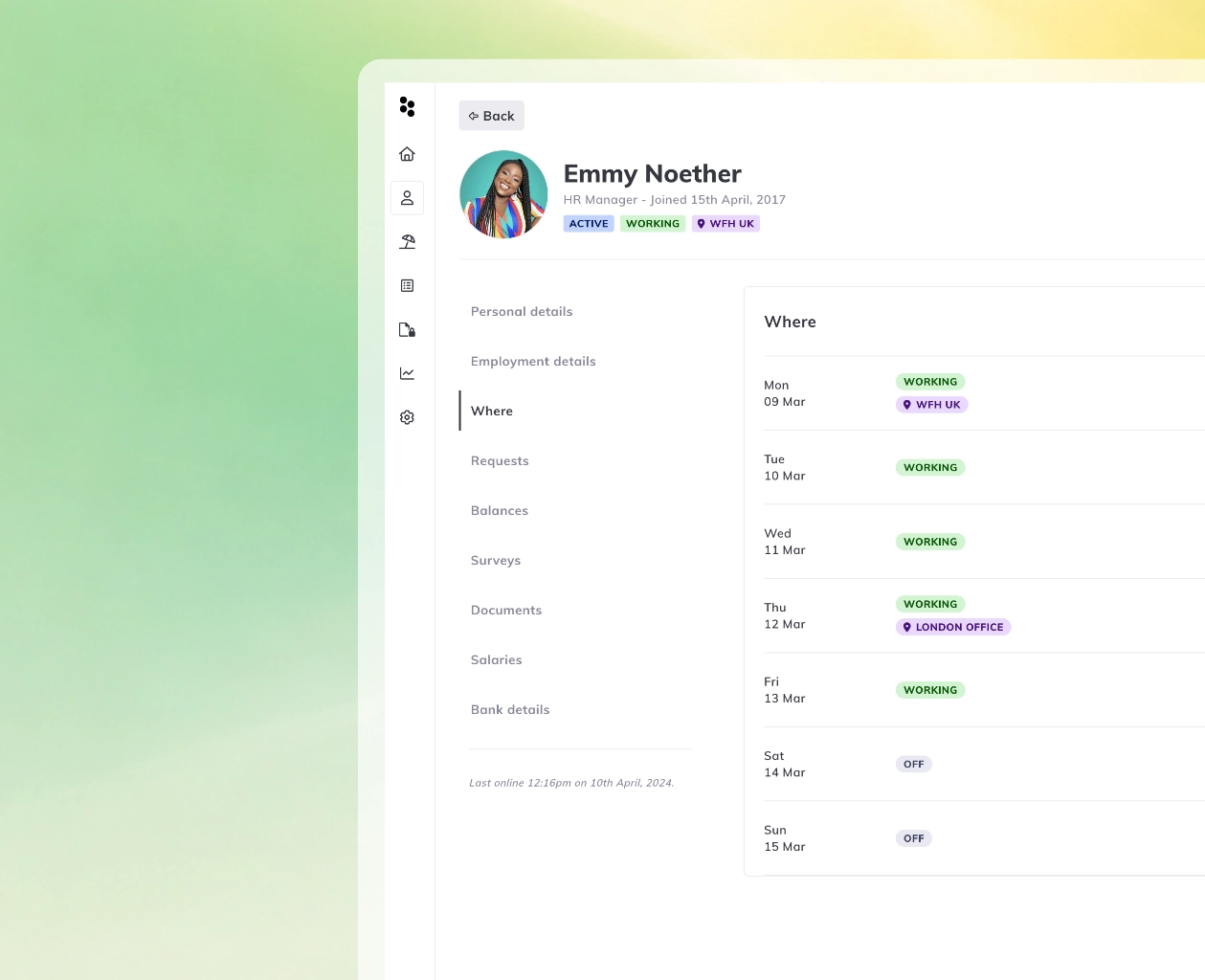
In practice, a private tenant HR deployment operates much like any other modern HR platform from a user perspective.
Employees and administrators access the platform through the same interface and workflows used in standard SaaS HR systems.
The difference lies behind the scenes, where the infrastructure, application environment, and database are dedicated to a single organisation.
Platforms such as PandaHR support private tenant deployments, allowing organisations to operate HR software within environments that align with their internal governance and security policies.
The growing role of private tenant HR deployments
As organisations place greater emphasis on data protection, governance, and infrastructure control, deployment models are becoming an increasingly important factor when selecting HR software.
Private tenant HR platforms allow businesses to modernise their HR operations while maintaining strong control over employee data and infrastructure.
For organisations that prioritise security, compliance, and operational flexibility, private tenant HR software offers a powerful alternative to traditional shared SaaS platforms.
Frequently asked questions
What is private tenant HR software?
Private tenant HR software is a deployment model where an organisation runs its own dedicated instance of an HR platform rather than sharing infrastructure with other customers.
How is private tenant different from multi-tenant SaaS?
In multi-tenant SaaS systems, many organisations share the same infrastructure, whereas private tenant deployments provide isolated environments dedicated to a single organisation.
Do private tenant HR systems have separate databases?
Yes. Private tenant deployments typically include dedicated databases so that employee data is stored separately from other organisations.
Why do companies choose private tenant HR software?
Companies often choose private tenant deployments when they need stronger control over infrastructure, data ownership, and security policies.
Who should consider private tenant HR software?
Private tenant HR platforms are often used by organisations that require stronger governance, infrastructure control, or compliance management for employee data.
HR software for SMBs
Clarity and control for growing organisations
Start your free trial of PandaHR and manage employee records, policies, and core HR workflows in one secure, structured platform.