How HR software helps companies stay compliant
Learn how HR software helps companies stay compliant with employment laws by managing employee records, policies, leave, and audit trails.

Employment compliance is one of the most important responsibilities employers face. Organisations must follow employment laws covering contracts, pay, working hours, employee rights, workplace safety, and data protection.
While understanding these regulations is essential, maintaining compliance across a growing workforce can quickly become challenging. As companies expand, employee records multiply, policies evolve, and employment arrangements change.
Without structured systems, keeping track of these moving parts becomes difficult. This is where HR software plays an important role.
Modern HR platforms help organisations organise employee data, monitor policies, and maintain clear records of HR processes, helping businesses stay compliant as they grow.
Centralising employee records
One of the most common causes of compliance problems is fragmented employee information. Contracts, identification documents, leave records, and performance information may be stored across spreadsheets, email threads, or shared folders.
HR software centralises employee records in one secure system. This allows organisations to maintain consistent and up-to-date information across their workforce.
Having a single source of truth for employee records also helps employers demonstrate compliance during audits or disputes.
Managing employment contracts and terms
Employment contracts often evolve as employees move roles, change working hours, or receive compensation adjustments.
HR software allows businesses to store contracts securely and track updates to employment terms over time.
This ensures that employment records remain accurate and aligned with the employee's current working arrangements.
Tracking leave and working patterns
Employment laws in many jurisdictions require employers to provide statutory leave and respect working time rules.
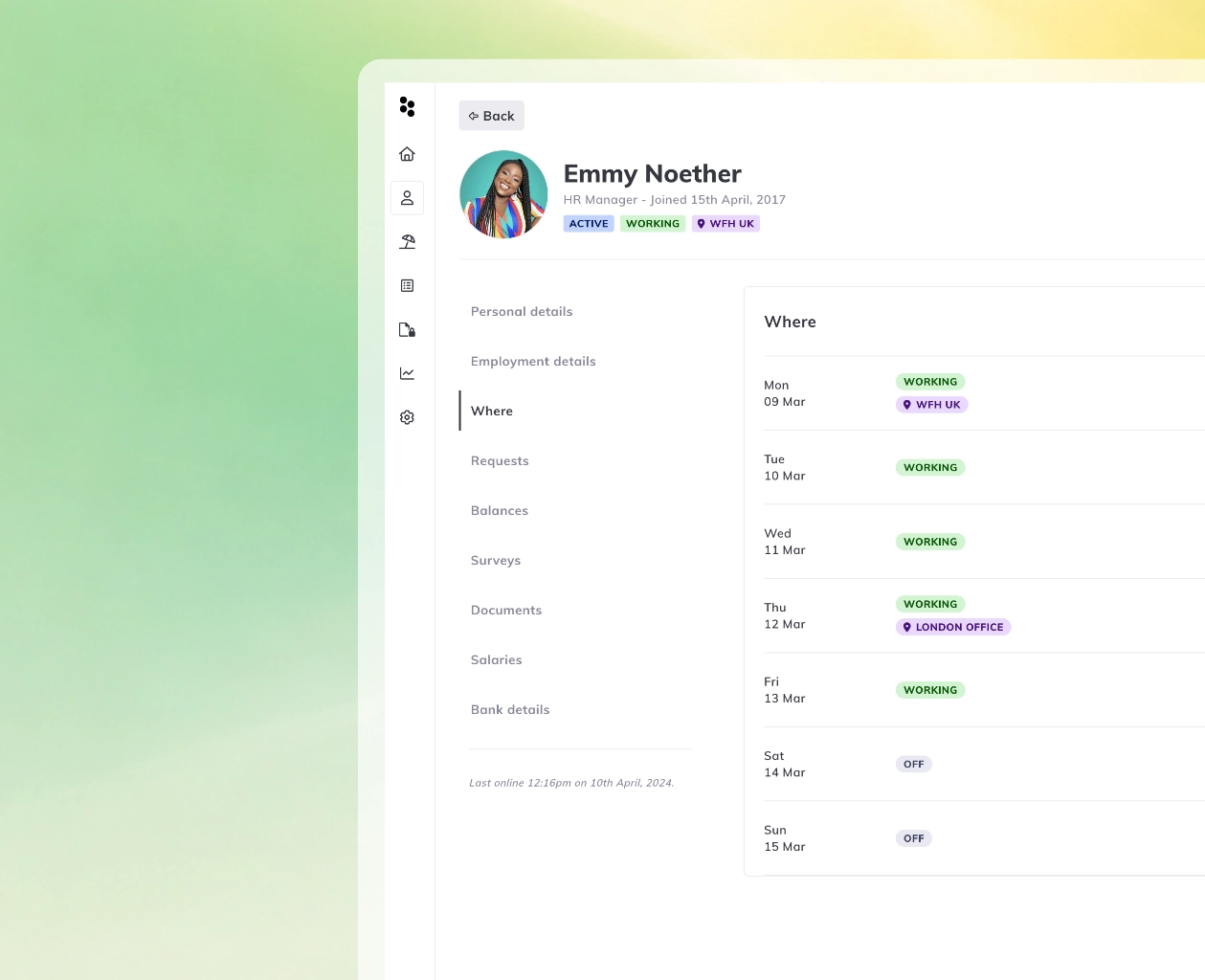
HR software helps organisations track leave balances, working patterns, and holiday entitlements.
This reduces the risk of incorrect leave calculations or employees receiving less leave than they are legally entitled to.
Policy management and acknowledgements
Employers are expected to maintain workplace policies covering areas such as disciplinary procedures, equality, workplace conduct, and data protection.
HR platforms can distribute these policies to employees and record acknowledgements, helping businesses demonstrate that employees were informed about workplace rules.
Tracking policy acknowledgements also ensures that policy updates are communicated consistently.
Maintaining audit trails
HR decisions often require documentation. Disciplinary actions, grievance procedures, and employment changes should all be recorded carefully.
HR software provides activity logs and audit trails that track key HR actions, making it easier for organisations to demonstrate fair and consistent processes.
This documentation can be valuable if disputes arise.
Protecting employee data
Employee data contains sensitive personal information and must be handled responsibly. HR systems typically include permission controls and secure data storage to protect employee records.
By controlling who can access sensitive information, organisations can reduce the risk of data protection breaches.
Supporting consistent HR processes
As organisations grow, HR processes often involve multiple managers and departments. Without clear systems, policies may be applied inconsistently.
HR software provides structured workflows that help organisations apply policies consistently across the workforce.
This consistency helps reduce compliance risks and improves transparency in HR decision-making.
How PandaHR helps businesses stay compliant
Platforms such as PandaHR help organisations centralise employee records, manage HR policies, track leave, and maintain audit trails.
By bringing these processes together in one platform, businesses gain better visibility across their workforce and reduce the likelihood of compliance issues caused by fragmented information.
As companies grow, having structured systems in place can make a significant difference in maintaining compliance and operational clarity.
Frequently asked questions
What is HR compliance?
HR compliance refers to following employment laws, workplace regulations, and internal policies that govern how businesses manage employees.
Why do companies struggle with HR compliance?
Companies often struggle because employee records, policies, and HR processes are managed across multiple systems without consistent oversight.
How does HR software improve compliance?
HR software centralises employee records, manages policies, tracks leave and working patterns, and provides audit trails that help organisations monitor compliance.
What HR processes should be tracked for compliance?
Businesses should track employment contracts, leave entitlements, working hours, policy acknowledgements, disciplinary records, and employee data management.
Can HR software prevent compliance mistakes?
HR software cannot replace legal advice, but it helps organisations maintain accurate records and structured processes that significantly reduce compliance risks.
HR software for SMBs
Clarity and control for growing organisations
Start your free trial of PandaHR and manage employee records, policies, and core HR workflows in one secure, structured platform.